













Understanding the AI Revolution
In the world of Artificial Intelligence, terms are often confused: Machine Learning, Deep Learning, LLMs – what does each mean? For companies looking to automate their document processes, understanding this is crucial.
What is Machine Learning?
Machine Learning (ML) is a subset of Artificial Intelligence where computers learn from data without being explicitly programmed. An ML system is trained with example data and recognizes patterns.
Traditional ML works like a student solving practice problems until they understand the pattern. They can then solve similar problems – but only similar ones.
Typical ML applications:
- Spam detection in emails
- Recommendation systems (Netflix, Amazon)
- Credit card fraud detection
- Simple image recognition
What are Large Language Models (LLMs)?
LLMs are a special form of Deep Learning trained on massive amounts of text. They don't just understand patterns, but language in its full complexity – context, nuances, irony.
An LLM works like an experienced expert who has read millions of documents. It understands context and can draw intelligent conclusions.
What LLMs can do:
- Understand and generate text in any language
- Answer complex questions
- Summarize documents
- Extract information from unstructured text
- Translations with context understanding
The Crucial Difference
| Aspect | Machine Learning | LLMs |
|---|---|---|
| Training | Structured data required | Learns from any text |
| Flexibility | One task per model | Many tasks, one model |
| Context | Limited | Deep understanding |
| Setup | Weeks to months | Ready immediately |
| Adaptation | New training required | Prompt engineering |
Why LLMs are Revolutionizing Document Processing
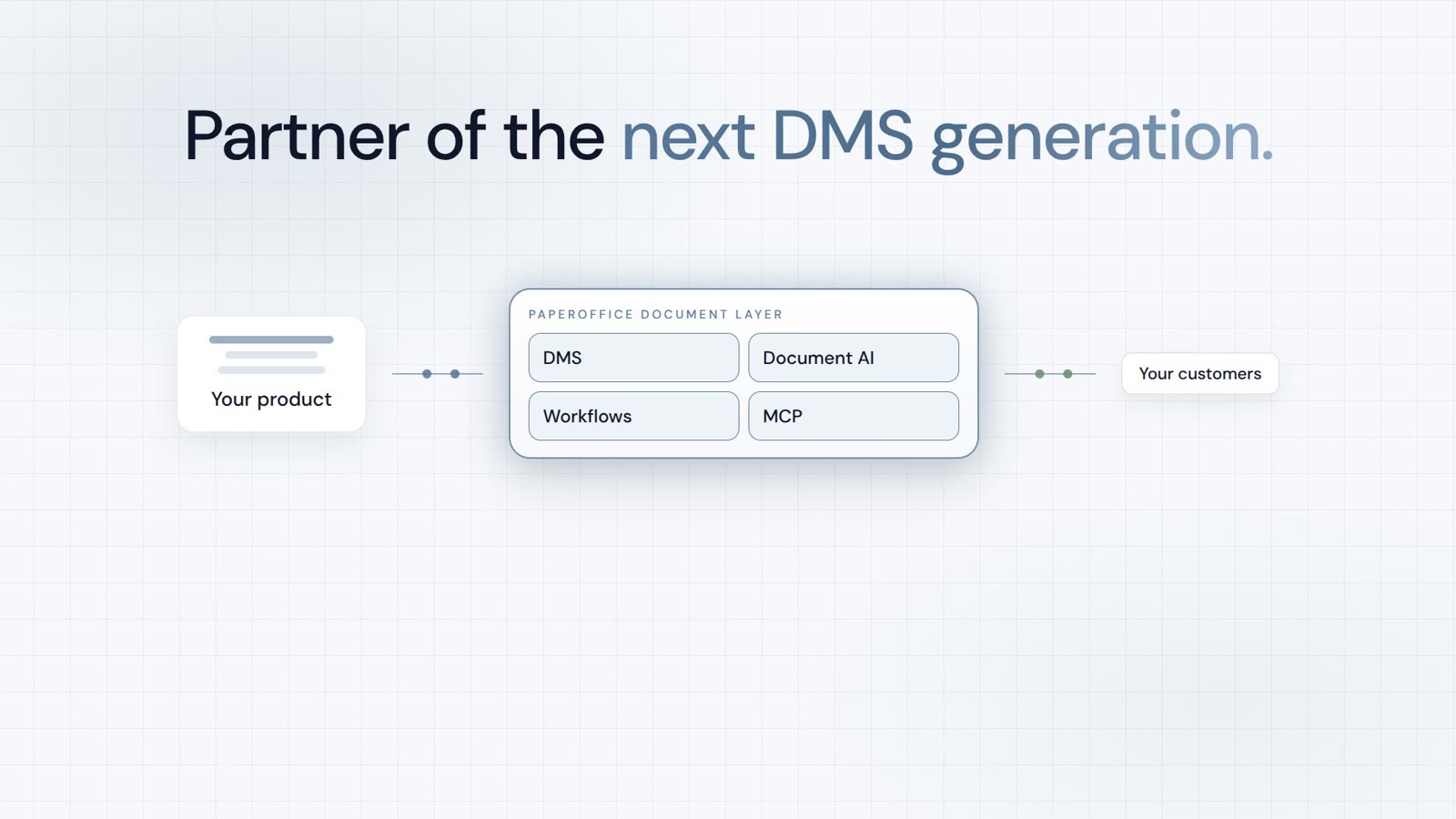
At PaperOffice, we use over 800 specialized LLMs – not because of hype, but conviction. The difference for your document processes:
1. No Training Required
Traditional ML needs thousands of labeled examples per document type. LLMs understand documents immediately – no training, no setup, no delay.
2. True Understanding vs. Pattern Matching
An ML system recognizes: "This is probably an invoice." An LLM understands: "This is an invoice from Company X to Company Y for delivery of Z on date D, payable by E."
3. Universal Applicability
One LLM can process invoices, contracts, correspondence, and manuals – without being retrained for each type.
Conclusion: The Right Technology for the Right Task
Machine Learning has its place – for clearly defined, repeatable patterns it's efficient. But for the complex, varied world of document processing, LLMs are the superior choice.
With PaperOffice AI, you get the best of both worlds: LLM understanding for content and context, combined with proven ML methods for specific recognition tasks.


