Scan, Sign & AI Chat
Mobile App
The mobile app pairs with your account via QR code and brings scanner, signature, chat and documents to your phone.


The big picture: how documents get into PaperOffice AI, how deep the engine reads, when a person decides, and how you use your documents in the app, on your phone, in your AI assistant and through the API.
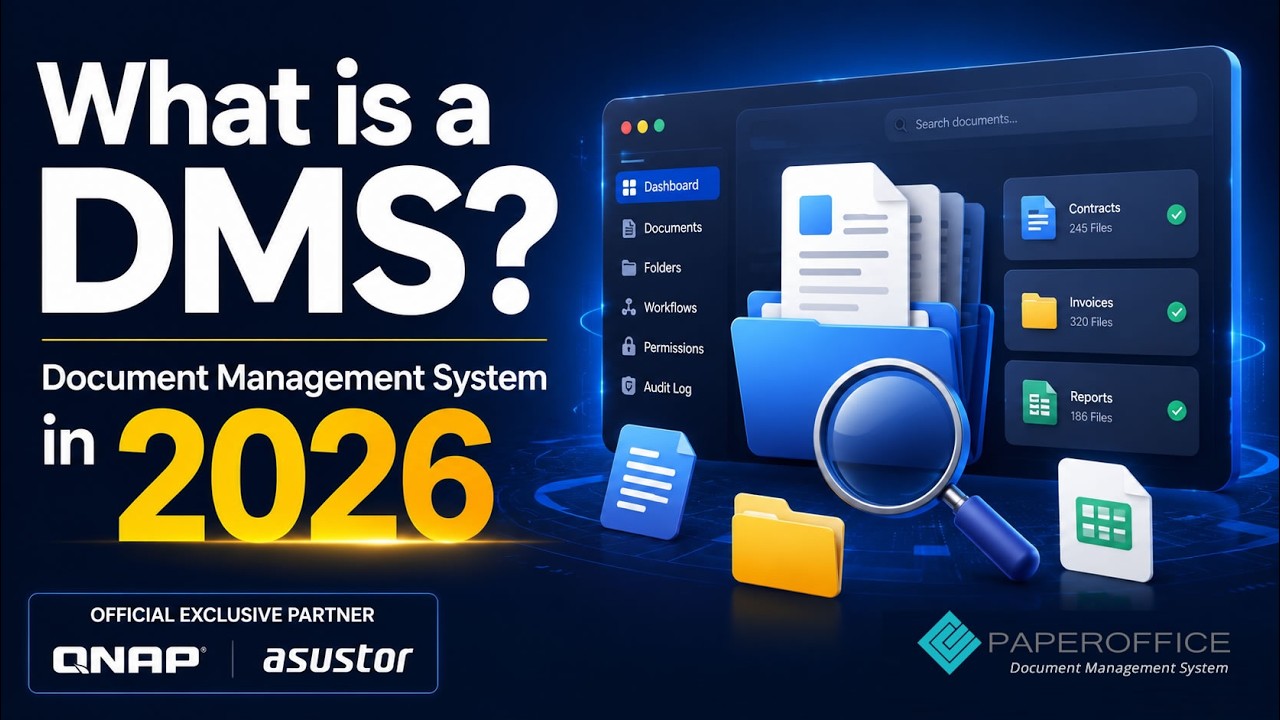
A document management system stores your documents. It can search them. And then it waits. It waits for a person to read, to decide, to type it all into the next system. If you want AI, you bolt a chatbot on the side, or you upgrade to the enterprise tier. You pay per seat, for every colleague who still has to do the work. And your archive sits in someone else’s cloud. Per seat. Enterprise only. Their cloud. Now imagine a system that understands the document, decides what happens next, and does it, whether a person asks or an agent does. No seat licenses. No enterprise tier for AI. On your own storage, if you want. That is PaperOffice AI: one engine, every door, your storage. PaperOffice AI is a Document
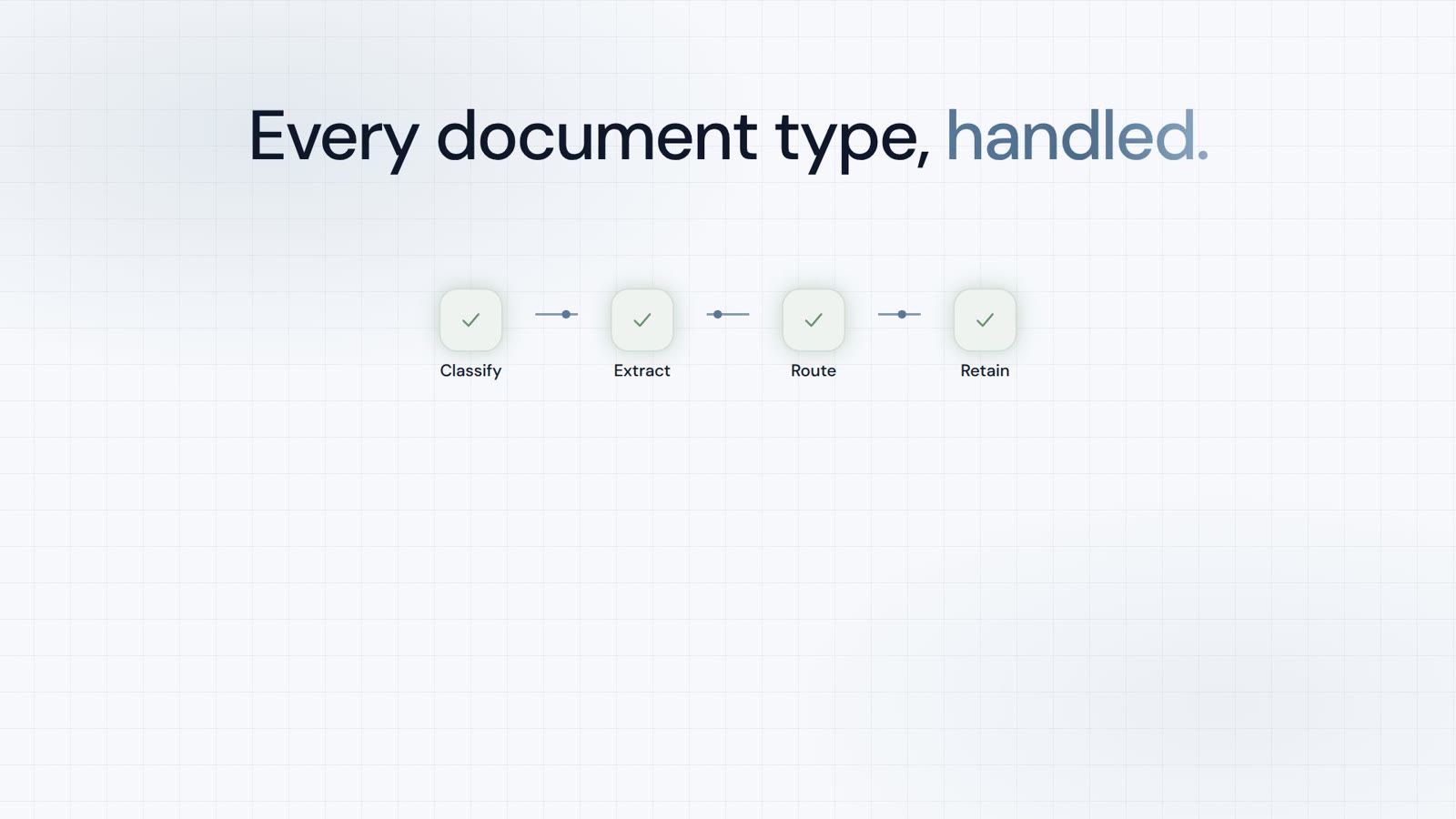
Operations platform. Understanding a document is not enough. What happens next is what counts. So the engine does three things with every document: it reads it, decides what the document needs, and acts. It files, extracts, routes, asks for approval, and hands over to your ERP. And people and AI agents work with the same documents, the same rules and the same permissions. Four doors, one platform.
There is a new kind of chaos, and it looks modern. Your AI assistants let you add documents to projects. So the contract goes into one project, the amendment into another, and a colleague uploads last month’s version into a third. Three copies, no owner, and nobody knows which one is current. PaperOffice AI is the single source of truth for documents. Every new version gets its own number, and the old one stays. Every assistant, every agent, every app reads the same current version, through the API or MCP. Nothing is copied around. One place, one truth, any client.
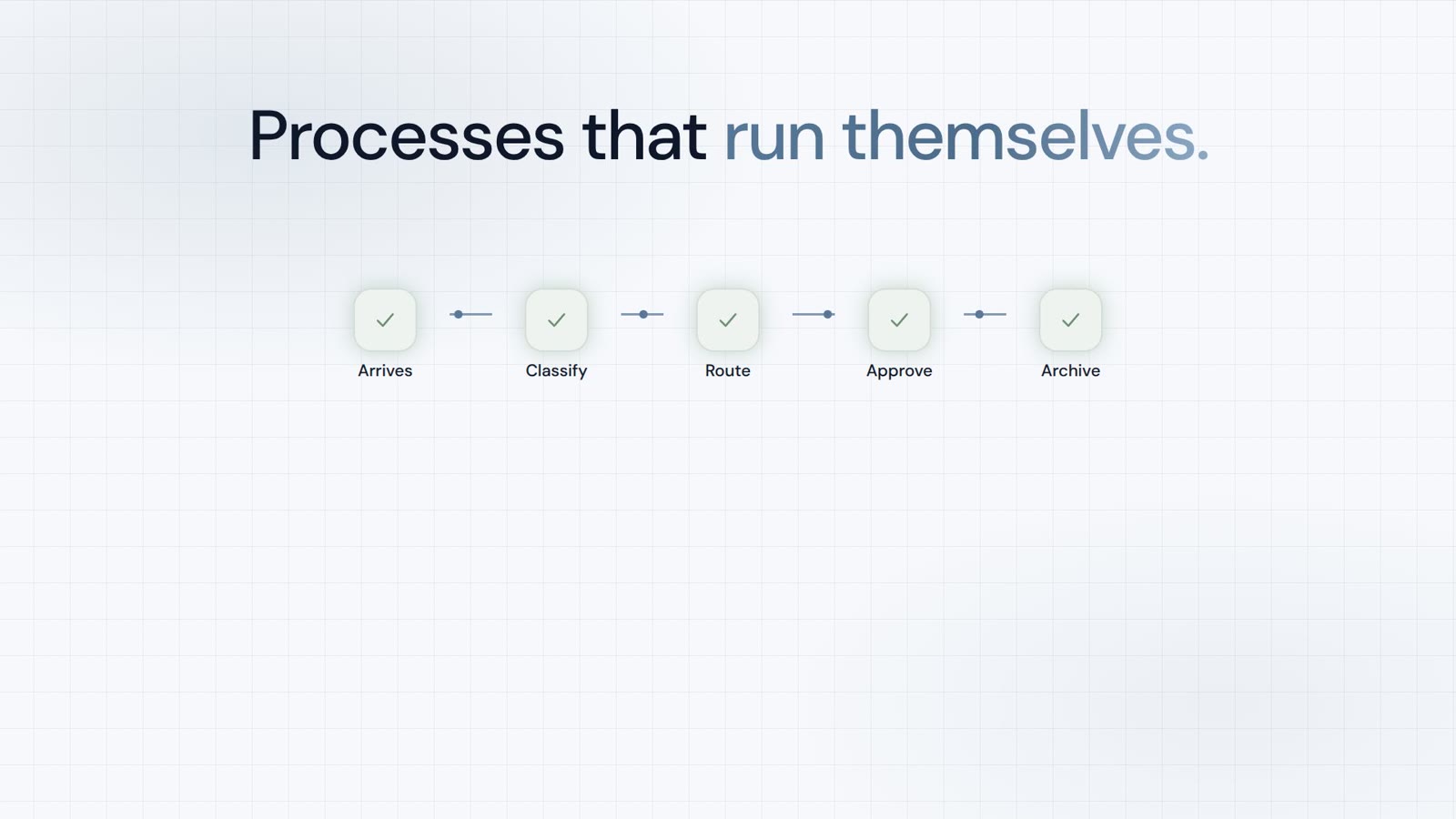
Start where documents arrive. The copier in the hallway scans to a folder, or straight into a PaperOffice scanner inbox. A connector watches the folder, every few minutes, by file pattern, and hands each new file to a workspace. The same for a mailbox, a NAS share, a cloud bucket. Nobody opens an app. Nobody renames a file. Step one is done: the delivery note is in the workspace, with a preview, and anyone can tag it by hand. No AI yet. That comes next.
Step two: switch on AI-DMS. Per workspace, you choose how deep the engine reads. Basic reads the text with AI-OCR and recognizes the document type. The type brings its rules: how long to keep it, on which legal basis, and which IDP Agent belongs to it. Premium understands the fields and connects the document to its business partner. Ultra audits it, checks it for fraud, and links it to everything that came before. Every new document runs through automatically. And any document can go deeper later.
Real documents are not clean PDFs. A freight invoice with a coffee stain. A delivery note from a dot-matrix printer. A service report photographed on a workshop table. AI-OCR reads all three: the text, the tables, and a bounding box for every line, each with its own confidence score. Handwriting included. That is the difference to classic OCR: it doesn’t guess characters, it understands the layout of the page. AI-OCR runs inside every AI-DMS pass. And you can call it on its own, through the API, or as an M C P tool. AI-DMS understands the
document broadly. The IDP Agent goes in like a sniper. The document type triggers it, and it fetches exactly what you defined: invoice number, supplier, amount, order reference, bank account. One field, one prompt, plus checks you define, for example: do the line items add up to the total? Every field comes back as data, with its position in the original. Then the next document looks different, a Spanish invoice, another layout, and the agent still finds the fields, because it reads meaning, not coordinates. If a required field is missing, the document lands in a review queue for a person. Run the agent by hand, in batch, in a workflow, or automatically for every document of that type.
Now the engine connects what belongs together. Ordered: one hundred power modules. Confirmed: one hundred. Delivered: ninety-eight. Invoiced: one hundred. A classic system would file four documents and move on. PaperOffice follows the order number across all four, sees the gap of two units, finds the credit note that corrects nine hundred and fifty euros, and links the payment on the bank statement: forty-six thousand five hundred and fifty. Resolved. No spreadsheet on the side.
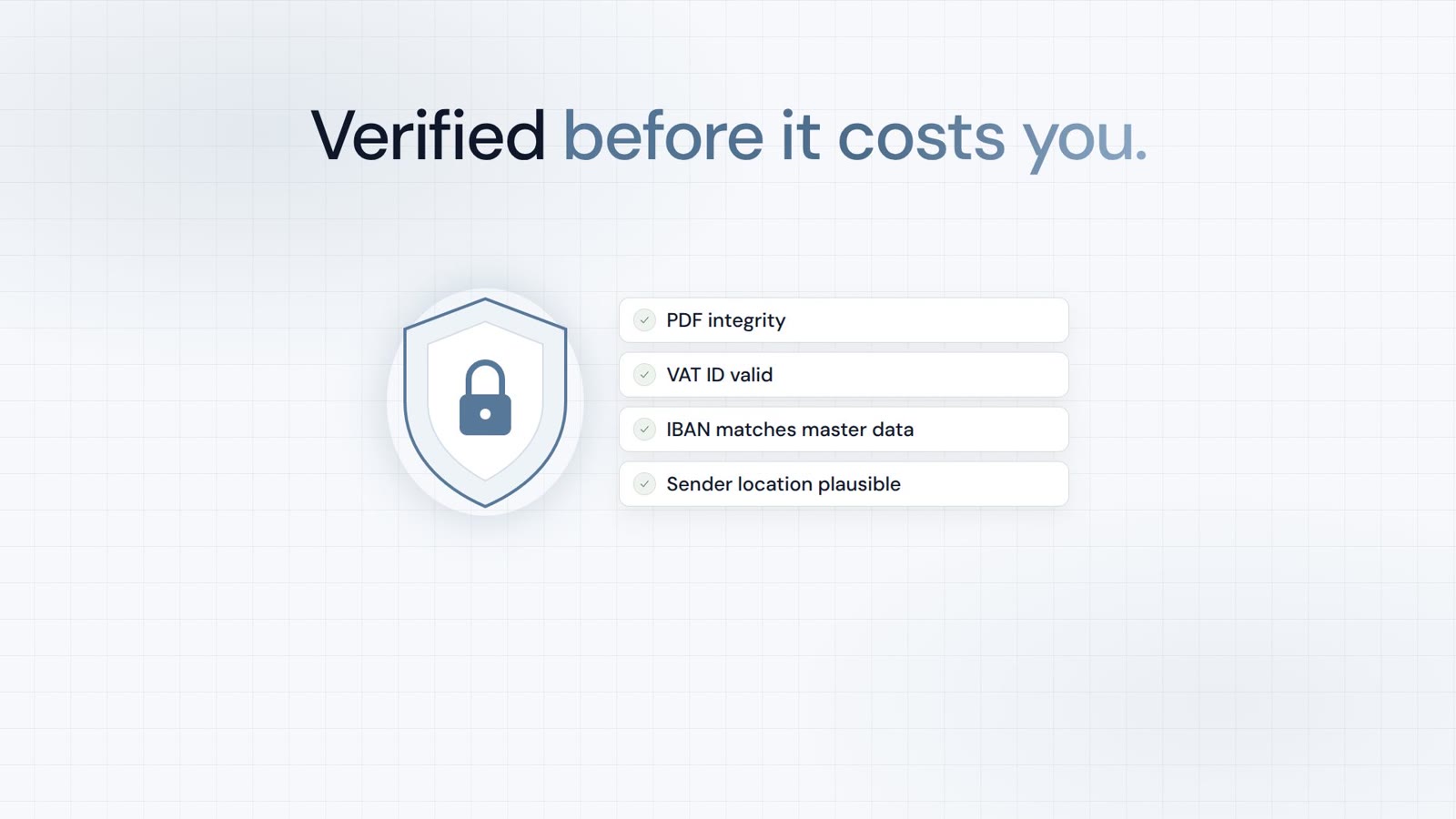
Some decisions stay with people. Here is one. An invoice arrives with a new bank account. The same day, an email asks to update the vendor record right away, and please don’t call the main switchboard. The engine has already put the new account next to the one in the supplier contract, scored the email as a classic fraud pattern, and stopped the workflow before payment. Now it needs a person. So the finance lead gets a push, on the beach, if that’s where she is. She sees the original, the two accounts, the warning, and decides with one tap. Not paid. Verified first. Every decision logged.
And who builds the workflow? You do, in plain language. No diagram needed. The document type is the trigger: every invoice starts this workflow. You describe the rule: if an invoice matches its order, approve it and hand it to our ERP for posting. If not, send it to finance with the reason. The engine turns that sentence into a workflow agent. Matched, approved, handed over. Every step leaves a line in the audit trail: what happened, by which rule, or by whom. Your ERP receives the posting through a webhook the moment it happens. Up to here, nobody has opened the PaperOffice app. That is the point.
Or you simply ask. In ChatGPT, in Cursor, in whichever AI assistant you already use. Which Norvexa invoices are still open? Has the controller order been delivered in full? Your assistant doesn’t get one PDF. It gets your workspace as tools, with your permissions: search, read, follow references, compare. And it answers with the documents it used, line by line. Two invoices, one paid, one open. Two deliveries, complete. This is not chat with your PDFs. This is your company’s memory, available to any model you trust.
Language doesn’t matter. A German invoice, a Spanish delivery note, an English contract: the engine puts all of them into one searchable body of knowledge. You ask in your language and get the answer in your language, with the sources in theirs. No translation project. No separate archive per country.
And because the tools are the same, an agent can do this without you. Give your assistant a routine, or schedule a workflow in PaperOffice: every morning at eight, sort the invoice inbox, match each invoice to its order, stop anything suspicious, and leave a summary. It runs. Through MCP, the agent works with the same permissions, the same rules and the same audit trail as a person. The frontier model lives in your client. The documents and the tools stay here.
So how do you use it? Three ways, one core. Use it as it is: the web app and the mobile app, ready on day one. Extend it: add-ons on the API and M C P, your own dashboards, your own automations. Or build your own product on the same core, headless, with your own interface. All three work on the same documents, the same permissions, the same tools. And we build for ourselves first: what we use every day, you get too, as an API and as MCP tools. It grows as far as you want to go.
How easy is that? Three steps. One: give your coding assistant, Cursor for example, the address paperoffice dot ai slash llms dot txt. It reads the platform’s documentation, the endpoints and the tools. Two: say what you want. A dashboard for held invoices, on top of PaperOffice AI. Three: it builds it. Your add-on runs against your workspace, with your permissions, the same evening. No SDK to learn. The platform explains itself to your editor.
On the phone, PaperOffice AI is an installable web app. No app store. Pair it with a QR code from your desktop, and from then on, sign in with your fingerprint. Point the camera at a document: edge detection, perspective correction, several pages in one go. No network? The scan waits and uploads later. Sign on the go with an SMS code. Ask the agent by voice. Approve with your thumb. Everything you scan lands in the workspace like any other document, with the same AI-DMS depth.
And the people outside your company? They get in too, without copies. Share a workspace in the browser: your customer gets a link, registers for free, and the shared workspace appears right next to their own. They see what you allow: read, or also upload. And for everyone who would rather talk than click, there are Conversation Agents: in the chat on your website, and on the phone.
Who answers when your customers call? Take a manufacturer of industrial controllers. The same questions arrive every day, by phone and in the website chat. Now a Conversation Agent answers them, from the company’s knowledge base: its articles and its whole website. What is the warranty on the controller? Thirty-six months from delivery, and in the chat, with a link to the source. Facts about the company come from the agent’s own instructions and its knowledge base. On the phone, an amount without a source is never spoken. If the agent cannot help, it texts the caller a link. The caller describes the request, and a ticket lands with the team. And if the caller prefers Spanish, they just say so. Your knowledge answers the phone.
Can you call your archive? Yes, with a PIN. Share a workspace with a phone number: a customer’s, a client’s, or your own, for the days on the road. The caller rings from a registered number and types the PIN, then the hash key. Three wrong tries, and phone access locks for a while. The agent names the workspace and asks what to look up. Which of our invoices are still open? It searches the documents and answers: one is paid, one is open. On request, it emails the open invoice, as a link to a password-protected PDF, and only to the address stored for this workspace. Per workspace, you set the voice, the language and extra instructions. The star key leads to reception. Ideal for practices, property managers and law firms.
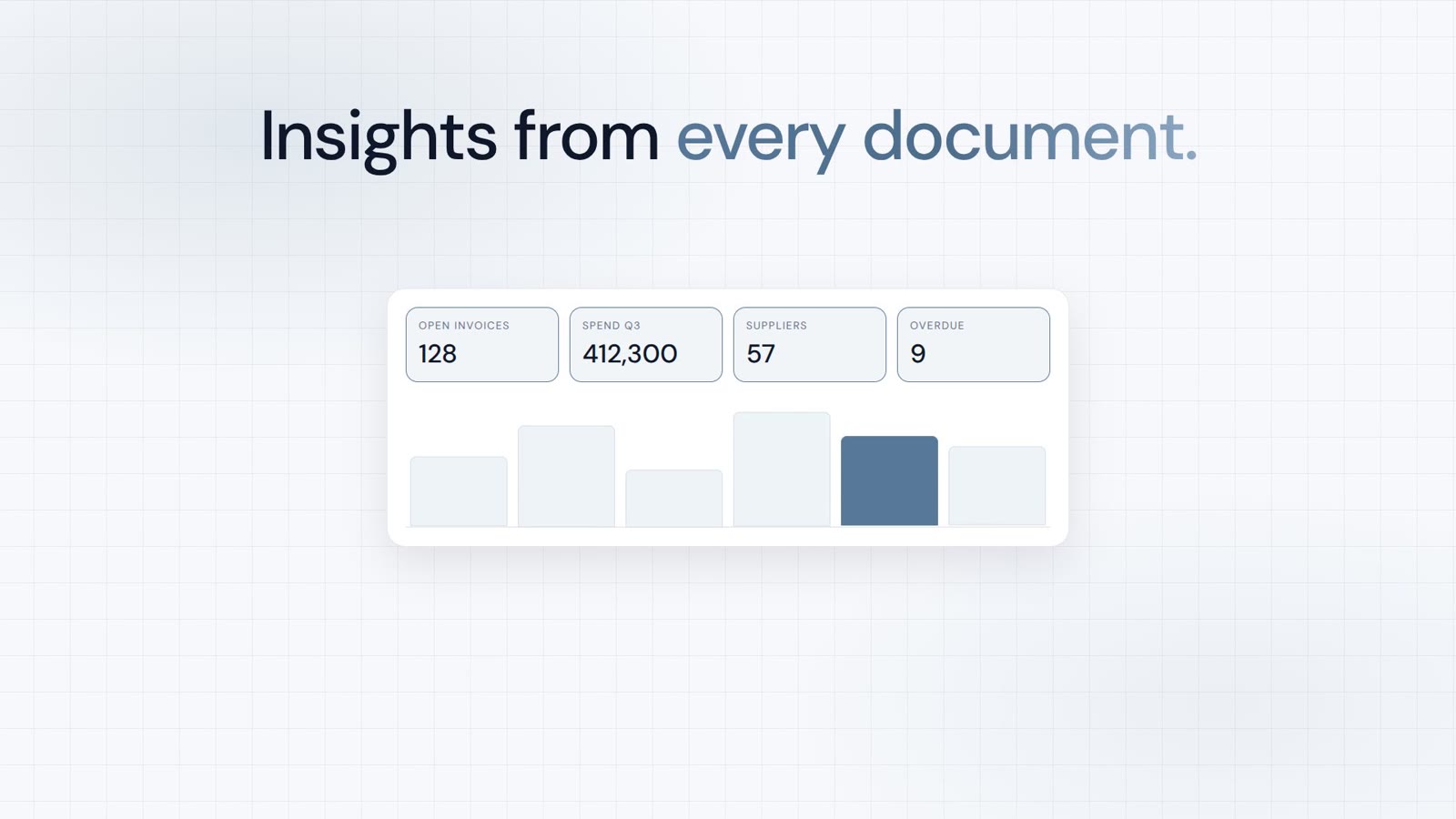
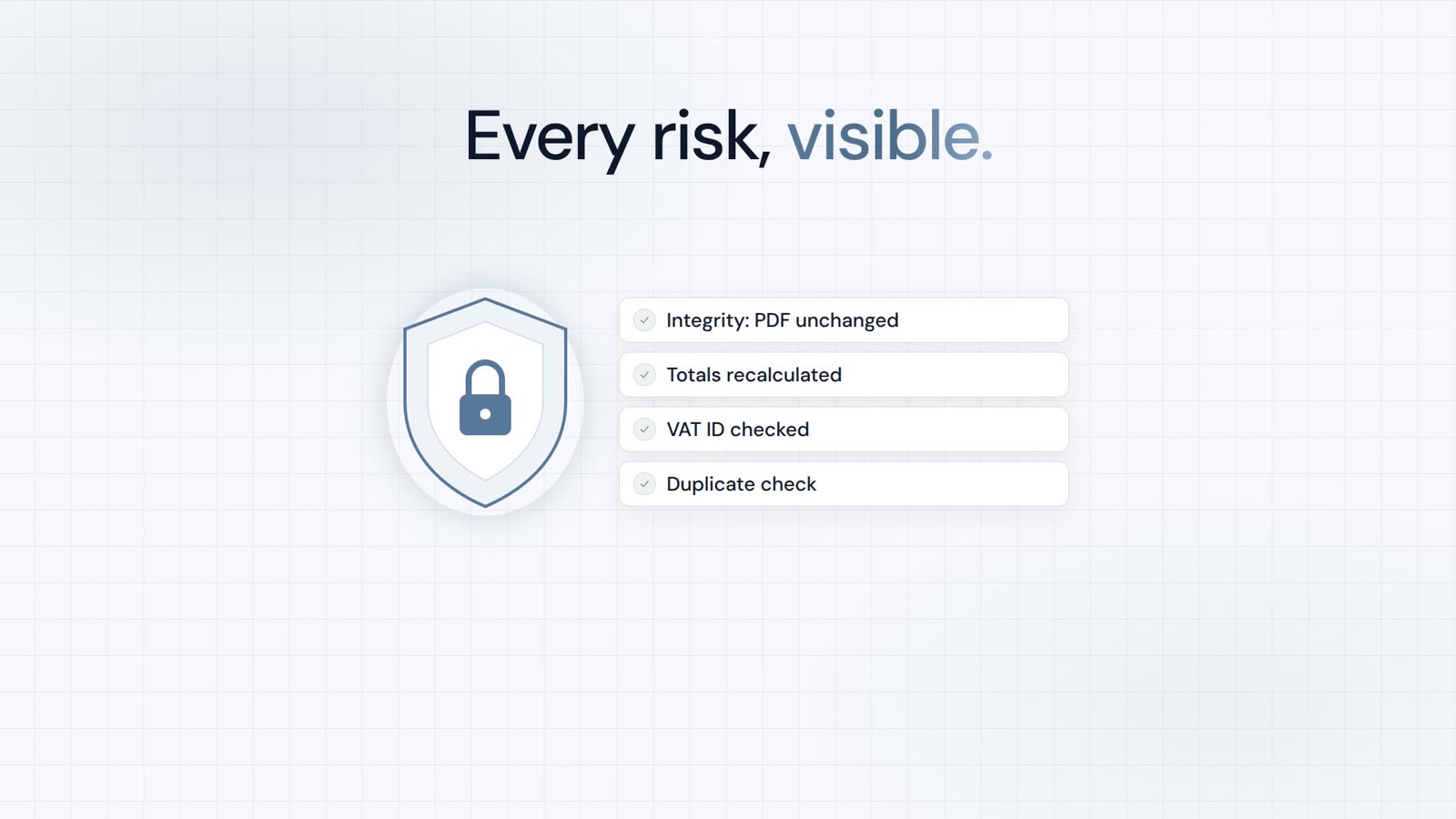
All of this is one engine, and the engine has many tools. Document AI: OCR, IDP Agents, a Split Agent that takes a scanned bundle apart, a Redact Agent that blacks out personal data before a payslip leaves the house, and a Trust Agent that checks every file for hidden text and tampering. Workflow AI in plain language, with templates and human-in-the-loop. Conversation AI: a chat agent that cites its source, and a phone agent. Media AI: text to speech in more than thirty languages, even in your own voice, and transcription. Knowledge Base AI for your articles and your website. Relations AI: every party from every document, and a graph of who relates to what. Analytics AI: your finances, computed from the fields IDP read. PaperOffice Sign, and a shelf of data services. More than forty capabilities, one account. Yours through the API, and many of them as MCP tools.
The engine reads documents. Can it write them, too? Meet the Creator Agent. Your letterhead becomes the template, straight from an existing document. Then you ask in plain language: a quotation for Norvexa, one hundred controllers, with commissioning on site. The agent takes the facts from your knowledge base, your customer records and your company profile. Every number needs a source. If a price is missing, or several customers match, it asks instead of guessing. You check the preview and confirm. Only then is the PDF created, numbered and stored in the workspace, like any other document. And the same agent runs through the A P I, and as an MCP tool.
Signing happens where the document already is. Send the amendment from the archive. The signer gets a link, confirms with an SMS code, and signs in the browser or on the phone. The signed PDF, with its signature certificate, lands next to the original. And anyone can check the signature later, independently, on a public verification page.
Do your files have to move? Not unless you want them to. A storage mount connects your NAS, your server or your cloud bucket, and you choose per connection. Index: the files stay on your storage and are never changed. PaperOffice makes them searchable, runs the same AI on them, and follows every change. As storage, over SFTP: every new document is written straight to your own device, encrypted with your own password. A second mount can mirror the first, and if the first one fails, PaperOffice reads from the mirror. Or import: the files move into our own data center in the European Union. Either way, PaperOffice keeps the index, the metadata and the AI results. Bring your own storage, and keep every AI capability. No vendor lock.
Where do your documents live, and who gets in? Reading, extraction, search and embeddings: in memory, on our own GPUs, in our own data center in the European Union, in Spain. Data in, data out: the model keeps nothing. You choose the storage: ours, or any NAS or server that speaks S F T P. Your AI assistant gets tools, never the archive, within your permissions.
For a team that wants invoices, contracts and mail handled without a developer project. For an integrator who builds PaperOffice into their own software. For a developer who wants Document AI as an API and as MCP tools. For a partner who resells it on their own invoice. Same account, same entry, same engine. No seat licenses: users are included in every plan, and usage is billed in credits. And behind it, a company founded in two thousand and two.
A document management system stores and waits. PaperOffice AI reads, decides, and acts. For the person who asks, and for the agent that asks in their name. One engine. Every door. Your storage. Built for humans. Ready for agents.
Choose language
Select currency
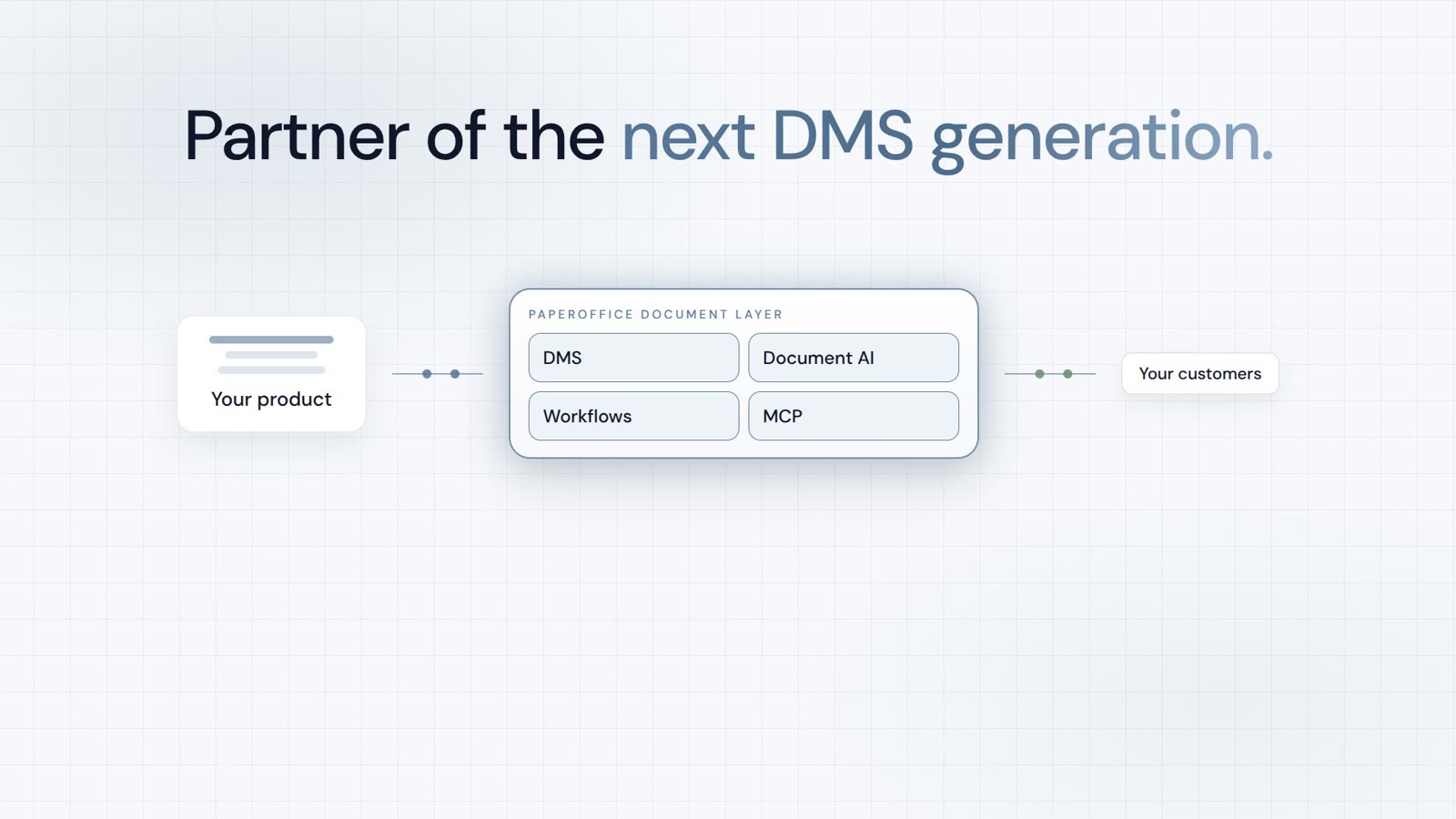
Integrator and Reseller can be combined. Referral by invitation.
View the partner program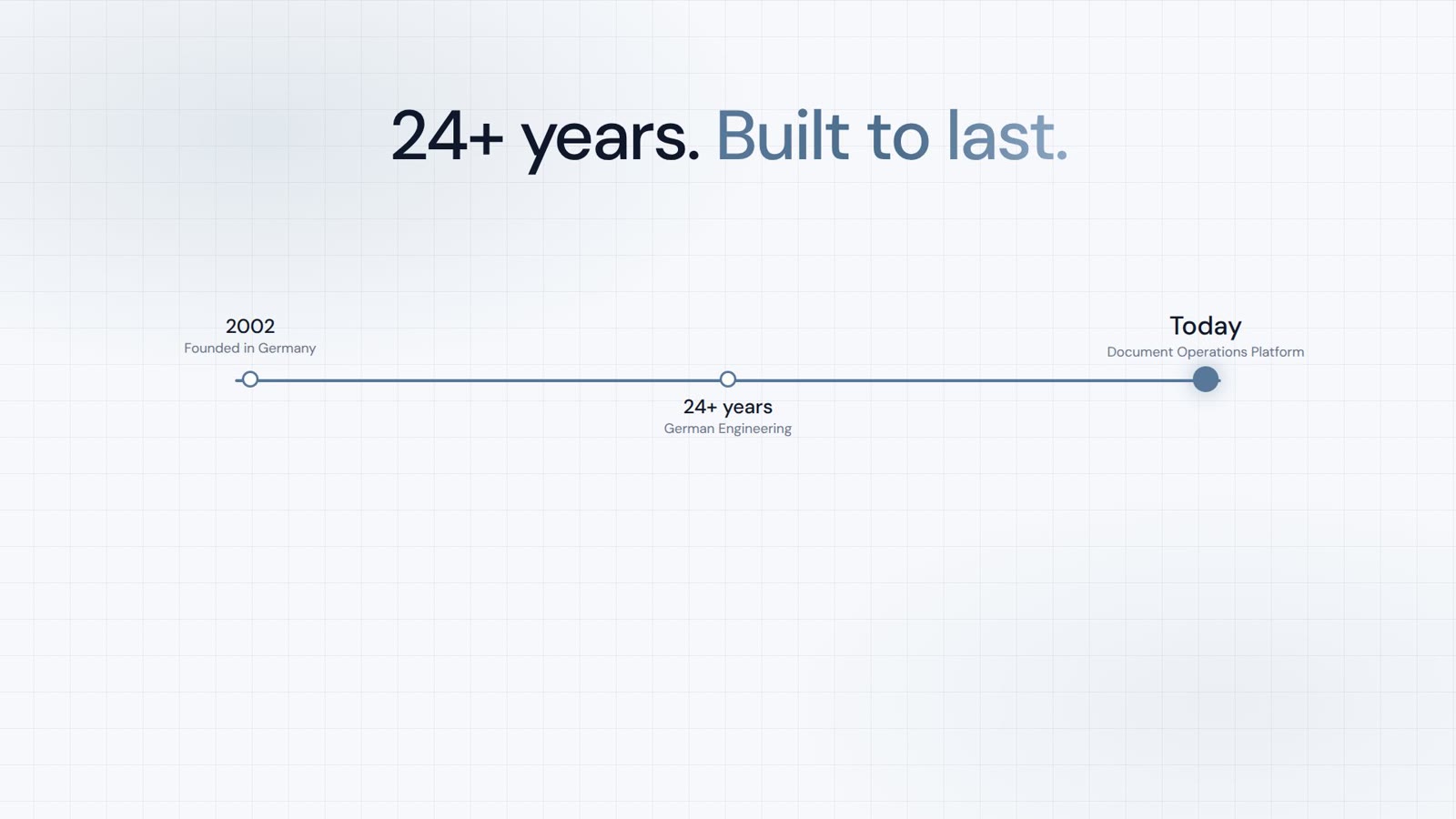
AI-DMS
Documents. Intelligence. Real impact.
PaperOffice AI is the AI-DMS. Four functional areas on one DMS foundation, with three ways in.
Features, modules and benefits at a glance.
Capture, organize, search and collaborate on documents.
Plug into your systems and AI workflows.