












What Is the EU AI Act?
The EU AI Act (Regulation (EU) 2024/1689) is the world's first comprehensive law regulating artificial intelligence. Entering into force on August 1, 2024, it is being implemented in phases through 2027. The goal: ensure AI in Europe is safe, transparent, and respects fundamental rights — without stifling innovation.
For businesses using Document AI, AI-IDP, or automated decision-making systems, this regulation is not a distant concern. Most obligations take effect on August 2, 2026 — less than four months from today.
The Timeline: When Do the Rules Apply?
The EU AI Act is being enforced in four phases:
| Date | What Happens |
|---|---|
| February 2025 | Prohibitions on unacceptable AI systems (social scoring, manipulative AI, real-time biometric surveillance) |
| August 2025 | Rules for General-Purpose AI (GPAI) and AI models with systemic risk |
| August 2026 | Main obligations for high-risk AI systems, transparency requirements, conformity assessments |
| August 2027 | Obligations for high-risk AI in regulated products (medical devices, vehicles, etc.) |
August 2026 is the critical deadline for most businesses. From that point, high-risk AI systems must undergo conformity assessment procedures, risk management systems must be in place, and extensive documentation requirements must be fulfilled.

The Four Risk Categories at a Glance
At the heart of the EU AI Act is a risk-based approach. The higher the risk of an AI system, the stricter the requirements:
Unacceptable Risk — Prohibited
Systems that violate fundamental rights: social scoring, manipulative AI, mass biometric surveillance. These have been banned since February 2025.
High Risk — Strictly Regulated
AI systems in sensitive areas: creditworthiness assessment, recruitment management, critical infrastructure, law enforcement. Require conformity assessment, risk management, and human oversight.
Limited Risk — Transparency Obligations
Chatbots, deepfakes, emotion recognition: users must be informed they are interacting with AI.
Minimal Risk — No Requirements
Spam filters, AI in video games, recommendation systems. No regulatory requirements.
What Does This Mean for Document AI and AI-IDP?
For businesses using Intelligent Document Processing (AI-IDP), the key question is: Which risk category does Document AI fall into?
The good news: most Document AI applications fall into the limited or minimal risk categories:
- OCR and text recognition: Minimal risk — no regulatory obligations
- Document classification: Minimal risk — automatic sorting of invoices, contracts, etc.
- Data extraction from forms: Minimal risk — structured data from unstructured documents
- AI-powered chatbots for customer service: Limited risk — transparency obligation (users must know they're talking to AI)
Caution is warranted when Document AI is used for automated decisions that significantly affect individuals — such as automated credit assessments based on documents or AI-driven applicant pre-screening.

5 Things Businesses Must Do Now
Regardless of risk category, we recommend every business using AI systems take these five steps:
1. Create an AI Inventory
Get a complete overview of all AI systems in your organization. Which software uses AI? Which decisions are automated? Where is personal data being processed?
2. Conduct a Risk Assessment
Classify each AI system into one of the four risk categories. Use the criteria from Annex III of the EU AI Act. When in doubt: seek professional advice.
3. Build Documentation
High-risk systems require extensive technical documentation: training data, performance metrics, risk management measures, test protocols. Start now — retroactive documentation is significantly more costly.
4. Ensure Human-in-the-Loop
Automated decisions that significantly affect individuals require human oversight. Implement clear escalation paths and review mechanisms.
5. Evaluate Your Vendors
If you use third-party AI systems, verify their EU AI Act compliance. Request conformity declarations. Prefer vendors with EU hosting and demonstrable compliance.
How PaperOffice AI Is Already Compliant
PaperOffice AI was built from the ground up with European values and the highest security standards. Our Document AI platform already meets the requirements of the EU AI Act:
- 100% EU Hosting: All data is processed exclusively in German and European data centers — no transfers to third countries
- GDPR Compliant: Full compliance with the General Data Protection Regulation, Privacy by Design
- SOC 2 and ISO 27001: Certified information security with regular audits
- Human-in-the-Loop: Integrated human review for critical decisions — no black-box automation
- Transparent AI: Traceable decisions, complete audit trails, explainable results
- Technical Documentation: Comprehensive API documentation, performance metrics, and test protocols for all 300+ AI tools
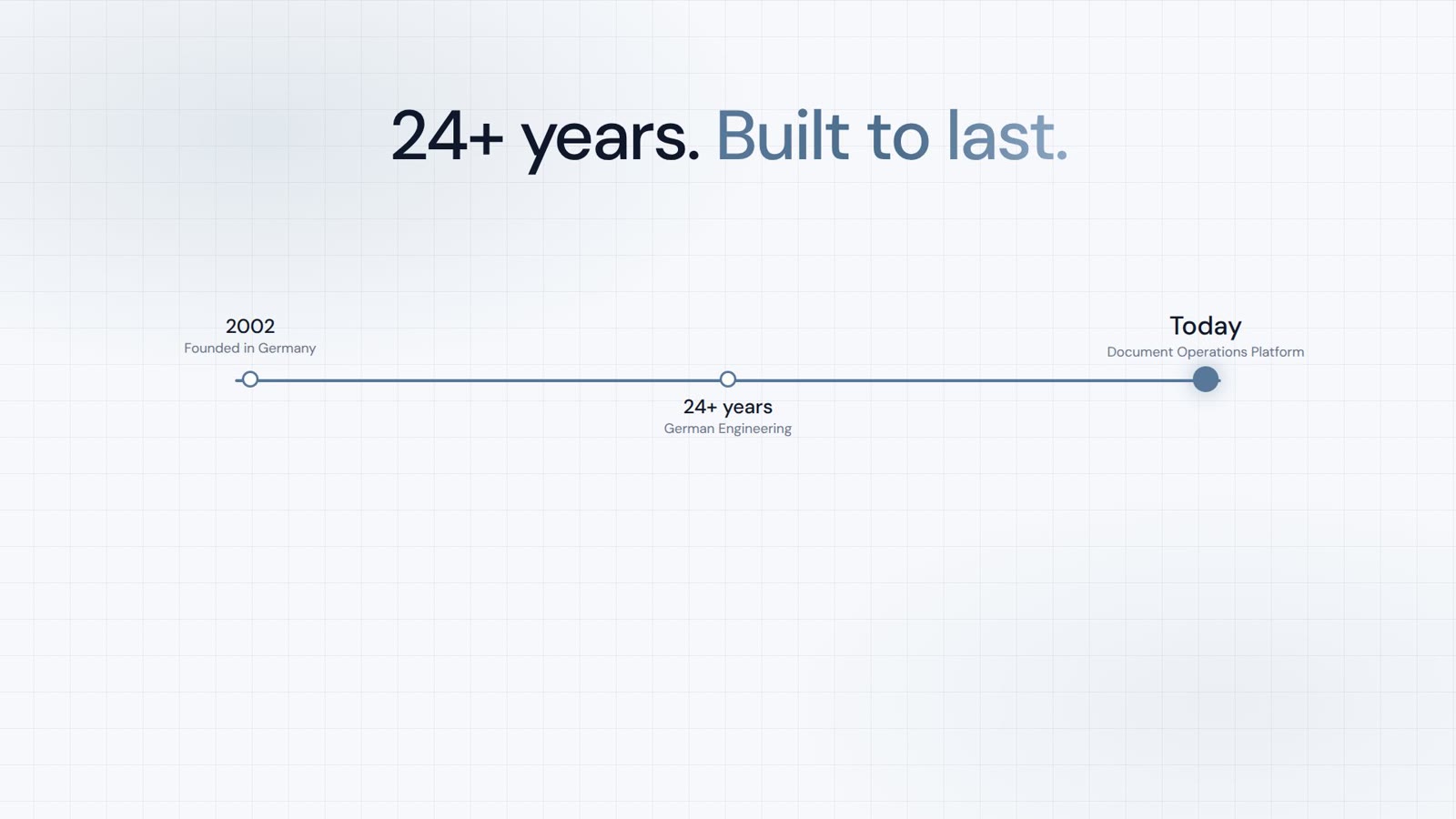
With over 24 years of experience in document processing and a focus on enterprise security, we are convinced: regulation and innovation are not contradictions. The EU AI Act creates trust — and trust is the foundation for broad AI adoption in European businesses.
The EU AI Act is not a hurdle, but an opportunity: businesses that invest in compliance now gain a sustainable competitive advantage over providers who ignore regulation.