
AI Acceptable Use and Output Disclaimer
Effective Date: May 10, 2026 Document Version: August 2026 Legally Binding Original Language: English
This AI Acceptable Use and Output Disclaimer (the "AI Disclaimer") is incorporated into and forms an integral part of the Master Service Agreement ("MSA") between PaperOffice and Customer. Capitalized terms not defined herein shall have the meanings set forth in the MSA.
This AI Disclaimer governs Customer's use of, and reliance on, AI-driven features of the Services — including but not limited to large language models (LLMs), agentic workflows, MCP tool flows, document understanding, generative outputs, classification, and any other probabilistic or AI-driven component.
1. Foundational Acknowledgment
1.1 Customer Acknowledgment
By using any AI-driven feature of the Services, Customer expressly acknowledges and agrees that:
(a) The Services include AI components based on probabilistic models, including large language models and other machine-learning systems;
(b) The behavior of such AI components is inherently non-deterministic — identical inputs may produce different outputs across invocations, model versions, or contexts;
(c) AI Outputs may contain inaccuracies, errors, hallucinations (fabricated facts), biases, omissions, or content that does not match Customer's expectations;
(d) The Services do not constitute, and AI Outputs are not, professional advice (legal, medical, financial, tax, engineering, or otherwise);
(e) Customer is solely responsible for reviewing, validating, and accepting or rejecting AI Outputs before relying on them;
(f) The probabilistic nature of AI cannot be eliminated through configuration, model choice, or support effort — it is a property of the technology itself.
1.2 No Warranty of AI Output
TO THE MAXIMUM EXTENT PERMITTED BY APPLICABLE LAW, PAPEROFFICE MAKES NO WARRANTY, REPRESENTATION, OR COMMITMENT THAT AI OUTPUTS WILL BE ACCURATE, COMPLETE, CURRENT, RELIABLE, CONSISTENT ACROSS INVOCATIONS, FREE FROM ERRORS OR HALLUCINATIONS, OR FIT FOR ANY PARTICULAR PURPOSE. ALL IMPLIED WARRANTIES OF MERCHANTABILITY, FITNESS FOR A PARTICULAR PURPOSE, AND NON-INFRINGEMENT ARE EXPRESSLY DISCLAIMED IN CONNECTION WITH AI OUTPUTS.
2. The Probabilistic Nature of AI — Specific Implications
2.1 Non-Determinism Is Not a Defect
Customer expressly agrees that the following are not Defects and do not give rise to any claim or remedy:
(a) An AI Output that differs from a previous AI Output for the same or similar input;
(b) An AI Output that does not match Customer's expectations, even where Customer believes the input "should" have produced a different output;
(c) An AI Output that is factually incorrect, incomplete, or contains hallucinations;
(d) An AI Output that fails to perform a multi-step Tool Flow correctly when the selected AI Tier is insufficient for the workflow's complexity;
(e) An AI Output that varies after a model update, model rotation, or infrastructure change;
(f) Variation in AI Output quality, latency, or behavior over time.
2.2 Tool Flow Combinatorics
The Services include four hundred (400+) interoperable tools accessible via MCP and direct API. The number of possible Tool Flow combinations is mathematically vast and cannot be exhaustively tested. Customer expressly acknowledges that:
(a) Novel combinations of tools, parameters, prompts, and use cases may produce unexpected, unreliable, or non-functional outputs;
(b) The fact that a specific Tool Flow does not work as Customer expects is not a Defect — it represents the discovery of an untested combination ("Frontier" or "Discovery"), and the appropriate response is iterative refinement, AI Tier upgrade, or Workflow redesign, not a claim against PaperOffice;
(c) PaperOffice does not warrant that any specific Tool Flow combination will produce any specific output.
2.3 Tier Selection and Capability Boundaries
The Services use a tiered AI processing model (Basic, Premium, Ultra, or as published in the Service Description). Each Tier corresponds to a different underlying model with different capability and reliability characteristics. Customer expressly acknowledges that:
(a) Lower Tiers (such as Basic) may be unable to reliably execute complex Workflows, multi-step Tool Flows, or sophisticated reasoning tasks;
(b) The choice of Tier directly affects output quality, reliability, and consistency;
(c) Customer's selection of a lower Tier for a complex use case is not a Defect — it is a configuration choice, the consequences of which are Customer's responsibility;
(d) PaperOffice may, in the user interface or documentation, provide non-binding recommendations regarding Tier selection. Such recommendations are advisory only and do not constitute warranties of suitability.
2.4 Hallucinations
AI Outputs may include "hallucinations" — content that appears plausible and authoritative but is factually inaccurate or fabricated. Customer expressly acknowledges:
(a) Hallucinations are an inherent characteristic of current large language models and cannot be fully eliminated;
(b) Customer must independently verify any AI Output before using it for any consequential purpose;
(c) PaperOffice has no liability for harms arising from Customer's reliance on hallucinated content.
2.5 Model Updates
PaperOffice may, from time to time, update or replace the underlying AI models used in any Tier. Such updates are part of the continuous improvement of the Services. Customer expressly acknowledges:
(a) AI Output behavior may change after a model update;
(b) Customer is responsible for testing its Workflows and Tool Flows after material model updates;
(c) Behavioral changes resulting from model updates are not Defects.
3. Customer Responsibilities
3.1 Independent Verification
Customer shall independently verify and validate AI Outputs before relying on them for any consequential purpose. The level of verification appropriate to a given AI Output is a matter for Customer's judgment based on the use case, risk, and applicable regulatory regime.
3.2 Human Oversight
Where AI Outputs are used for decisions affecting natural persons, regulated activities, or safety-significant operations, Customer shall implement appropriate human oversight, including review of AI Outputs by qualified personnel before any consequential action is taken.
3.3 Disclosure to End Users
Where Customer uses AI features of the Services to interact with its own end users (for example, a customer-facing chatbot, a phone agent, or a ticket agent), Customer shall:
(a) Provide clear notice that the end user is interacting with an AI system, in accordance with Article 50 of the EU AI Act and equivalent transparency obligations;
(b) Provide a meaningful escalation path to a human representative;
(c) Implement appropriate guardrails, content filtering, and safeguards;
(d) Comply with applicable consumer protection law regarding the AI-generated content presented to the end user.
3.4 Compliance with Article 22 GDPR
Where AI Outputs are used to make fully automated decisions producing legal effects or similarly significant effects on natural persons, Customer shall:
(a) Establish a valid legal basis under Article 22 GDPR;
(b) Implement appropriate safeguards including the right to obtain human intervention, the right to express a point of view, and the right to contest the decision;
(c) Provide meaningful information about the logic involved, the significance, and the envisaged consequences;
(d) Maintain documentation supporting compliance.
3.5 Data Inputs
Customer shall ensure that data inputs to AI features:
(a) Are lawfully obtained and processed in accordance with applicable data protection law;
(b) Are not Special-Category Data unless processed under a valid legal basis with appropriate safeguards;
(c) Do not include third-party intellectual property used without authorization;
(d) Comply with the AUP.
3.6 Output Use
Customer shall ensure that the use of AI Outputs:
(a) Complies with applicable law (including consumer protection, defamation, intellectual property, and discrimination law);
(b) Does not infringe the rights of any third party;
(c) Is not used in any prohibited or restricted manner under the AUP;
(d) Where consequential, is reviewed by qualified human personnel.
4. EU AI Act — Allocation of Roles
4.1 Regulatory Framework
The European Union Artificial Intelligence Act (Regulation (EU) 2024/1689, the "EU AI Act") establishes a regulatory framework for AI systems placed on the EU market. Compliance obligations depend on the role each Party plays for a given use case.
4.2 PaperOffice's Role
PaperOffice acts as a provider of general-purpose AI components, infrastructure, and tools. Unless otherwise specified for a particular feature in the documentation, PaperOffice does not market the Services as a high-risk AI system within the meaning of Annex III of the EU AI Act.
4.3 Customer's Role
Where Customer integrates the Services into its own products, services, workflows, or business processes:
(a) Customer typically acts as a Deployer within the meaning of the EU AI Act;
(b) Where Customer materially modifies, fine-tunes, brands, or rebrands the Services, Customer may also be considered a Provider within the meaning of the EU AI Act;
(c) Customer is solely responsible for determining whether its specific use case constitutes a high-risk AI system under Annex III;
(d) Where Customer's use case is high-risk, Customer is responsible for all applicable obligations including risk management, data governance, technical documentation, record-keeping, transparency to deployers and end users, human oversight, accuracy, robustness, cybersecurity, conformity assessment, and registration in the EU database;
(e) Customer is responsible for compliance with the prohibited practices in Article 5 of the EU AI Act.
4.4 General-Purpose AI Models
To the extent the Services are based on or include general-purpose AI models, PaperOffice may publish technical documentation, model cards, system cards, training data summaries, or transparency information consistent with the EU AI Act's GPAI provisions, where applicable. Customer may use such documentation as part of its own compliance documentation.
4.5 Cooperation
PaperOffice and Customer shall cooperate reasonably to allocate, implement, and document compliance obligations under the EU AI Act in connection with Customer's specific use case, recognizing that the primary responsibility for use-case-specific compliance lies with Customer.
5. Prohibited AI Uses
In addition to the prohibited uses set forth in the AUP, Customer specifically shall not:
5.1 Article 5 EU AI Act Prohibited Practices
Use the Services for any practice prohibited under Article 5 of the EU AI Act, including without limitation:
(a) Deployment of AI systems using subliminal techniques beyond a person's consciousness, or purposefully manipulative or deceptive techniques, with the objective or effect of materially distorting behavior;
(b) Exploitation of vulnerabilities of natural persons or specific groups of persons (age, disability, social or economic situation);
(c) Social scoring of natural persons by public authorities;
(d) Predictive policing based solely on profiling of a natural person;
(e) Untargeted scraping of facial images from the internet or CCTV to create or expand facial recognition databases;
(f) Inference of emotions in workplaces and educational institutions, except for medical or safety reasons;
(g) Biometric categorization that infers sensitive attributes (race, political opinions, trade union membership, religious beliefs, sex life, sexual orientation);
(h) Real-time remote biometric identification in publicly accessible spaces by law enforcement, except as permitted under strict conditions in the EU AI Act.
5.2 Misleading or Manipulative Use
(a) Generating content intended to deceive or materially mislead recipients about its AI origin, attribution, or factual content;
(b) Generating non-consensual deepfakes of real persons (visual, audio, or video);
(c) Generating fraudulent identification documents, counterfeit currency, or counterfeit certificates;
(d) Generating disinformation or propaganda intended to manipulate elections, public opinion, or markets;
(e) Generating content that falsely attributes statements or actions to real persons or entities.
5.3 Harm to Persons
(a) Generating content that depicts, promotes, or facilitates child sexual abuse material, regardless of fictional or real depiction;
(b) Generating content that promotes self-harm, suicide, or eating disorders;
(c) Generating content intended to facilitate violence, terrorism, or mass-casualty events;
(d) Generating content that targets minors with content unsuitable for minors.
5.4 Bypass of Safety Mechanisms
Bypassing or attempting to bypass the safety mechanisms, content filters, or guardrails of the AI components, including through prompt injection, jailbreaking, or other adversarial techniques against PaperOffice's safety systems.
5.5 Use to Train Competing Models
Using AI Outputs, training data extraction techniques, or any other artifacts of the Services to train, fine-tune, evaluate, or improve any competing AI model or service.
6. Specific Disclaimers for AI Use Cases
6.1 No Legal Advice
AI Outputs do not constitute legal advice. Customer shall not rely on AI Outputs for legal decisions and shall consult qualified legal counsel for matters with legal consequences.
6.2 No Medical Advice
AI Outputs do not constitute medical advice. Customer shall not rely on AI Outputs for medical diagnosis, treatment, or other healthcare decisions and shall consult qualified medical professionals.
6.3 No Financial or Tax Advice
AI Outputs do not constitute financial, investment, accounting, or tax advice. Customer shall not rely on AI Outputs for financial decisions, investment decisions, accounting determinations, or tax filings and shall consult qualified professional advisors.
6.4 No Engineering or Safety Advice
AI Outputs do not constitute engineering, structural, or safety advice. Customer shall not rely on AI Outputs for safety-significant engineering decisions and shall obtain qualified professional review.
6.5 Document Extraction Accuracy
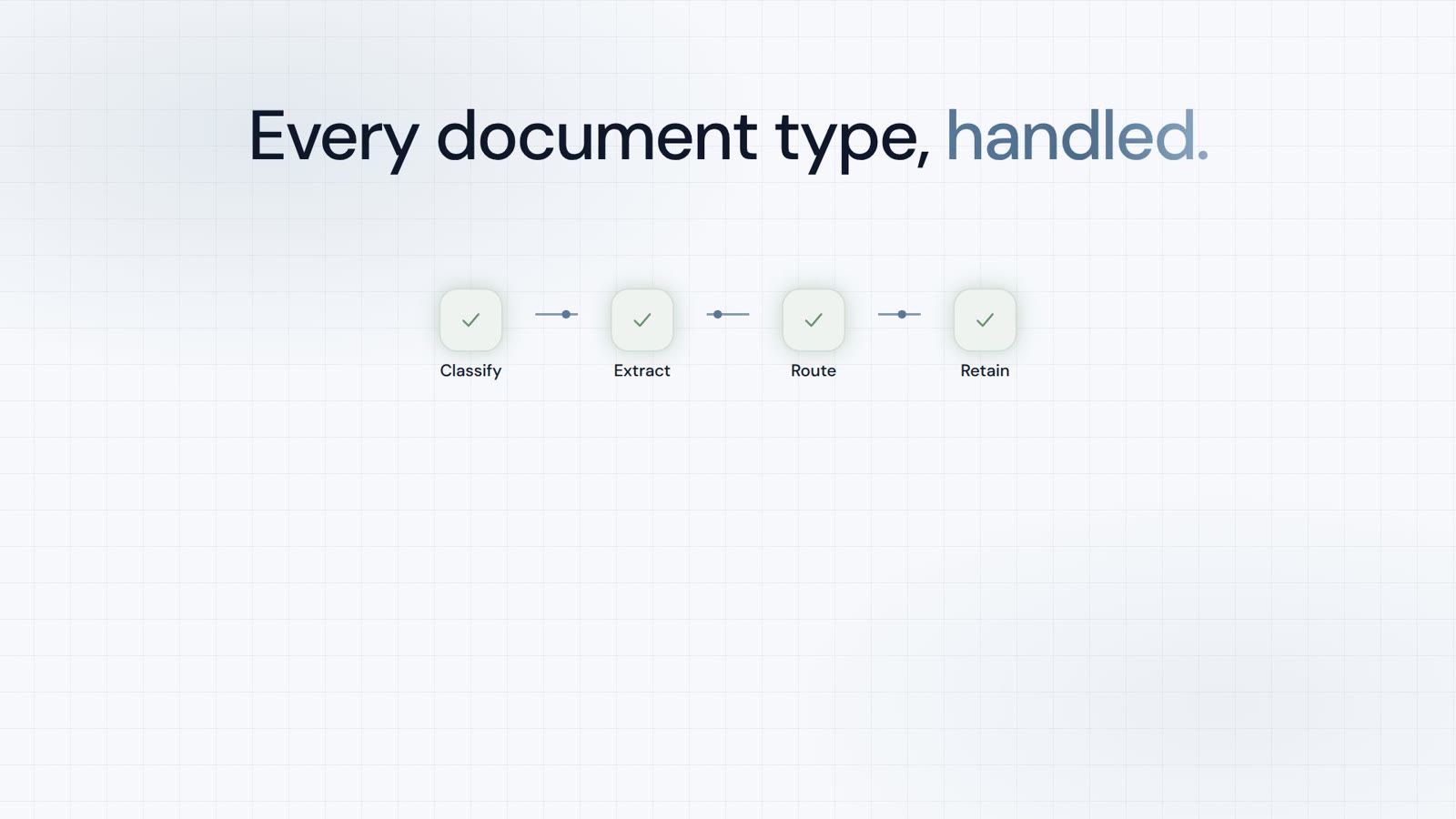
OCR, IDP, classification, and extraction features may produce inaccurate or incomplete results, particularly for low-quality scans, handwritten content, complex layouts, or unusual document types. Customer shall implement appropriate quality controls before relying on extracted data for consequential purposes (such as financial postings, regulatory filings, or contractual decisions).
6.6 Translation Accuracy
Machine translation features may produce inaccurate, incomplete, or contextually inappropriate translations. Customer shall not rely on machine translation alone for legally binding documents, regulatory filings, or other contexts requiring certified translation.
6.7 Voice and Audio Features
Speech-to-text and text-to-speech features may produce errors, mispronunciations, or transcription inaccuracies. Customer shall implement appropriate review for any consequential use (such as official transcripts or recorded statements).
6.8 Fraud Detection and Risk Scoring
Fraud detection, risk scoring, and similar AI features produce probabilistic indicators only. Customer shall not rely on such indicators alone for decisions affecting natural persons (such as access decisions, denial of service, or law enforcement referral) without appropriate human review and compliance with applicable law (including Article 22 GDPR and Article 5 of the EU AI Act).
7. Customer Indemnification for AI-Related Claims
7.1 Customer's Indemnification
In addition to and consistent with Section 12.2 of the MSA, Customer shall defend, indemnify, and hold harmless PaperOffice from and against any third-party claim arising out of or related to:
(a) Customer's use of, or reliance on, AI Outputs;
(b) Customer's selection of an inappropriate AI Tier, prompt design, Workflow configuration, or Tool Flow;
(c) Customer's failure to implement appropriate human oversight or independent verification;
(d) Harm caused by AI Outputs presented or relied upon by Customer's end users;
(e) Customer's violation of the prohibited AI uses in Section 5;
(f) Customer's failure to comply with the EU AI Act, GDPR, or other applicable AI or data protection law;
(g) Any claim that Customer's product, service, or business process — whether or not it incorporates the Services — infringes, misappropriates, or violates the rights of any third party.
7.2 No PaperOffice Indemnification for AI Output
PaperOffice does not provide indemnification for claims arising from AI Outputs themselves (as distinct from claims that the Services as such infringe a third-party intellectual property right, which are addressed in Section 12.1 of the MSA).
8. AI Output Ownership
8.1 Allocation as Between the Parties
As between PaperOffice and Customer, Customer owns the AI Output generated specifically in response to Customer's prompts and inputs, subject to:
(a) PaperOffice's underlying intellectual property rights in the models, infrastructure, and algorithms;
(b) The fact that AI Outputs may not be unique to Customer — similar prompts from other customers may yield similar outputs;
(c) Customer's obligations regarding lawful use;
(d) Any third-party rights that may exist in the underlying training data or in similar outputs.
8.2 No Warranty Against Similar Outputs
PaperOffice does not warrant that any AI Output is unique to Customer or that similar outputs will not be generated for other customers.
8.3 No Warranty Against Third-Party Rights
PaperOffice does not warrant that AI Outputs do not incorporate, resemble, or correspond to content protected by third-party intellectual property rights. Customer is responsible for verifying that AI Outputs are not infringing before any consequential use.
8.4 Customer's License to PaperOffice
Customer grants PaperOffice the licenses set forth in Section 5.2 of the MSA, including for the limited purposes of providing the Services, security and abuse prevention, and aggregated statistics.
8.5 No Use for Model Training Without Consent
PaperOffice will not use Customer Data or AI Outputs to train general-purpose models offered to other customers, except as set forth in Section 5.3 of the MSA.
9. Limitation of Liability
The limitations of liability set forth in Section 10 of the MSA apply in full to all claims arising from or related to AI Outputs, AI features, agentic Workflows, MCP Tool Flows, or any other AI component of the Services.
10. Modifications
PaperOffice may update this AI Disclaimer from time to time as set forth in Section 11 of the MSA. Updates apply prospectively. Continued use of the AI features of the Services after the effective date of an update constitutes acceptance.
11. Order of Precedence
In the event of conflict between this AI Disclaimer and: (a) an executed Order Form, the Order Form shall prevail; (b) the MSA, the MSA shall prevail for matters of legal interpretation; (c) the AUP, this AI Disclaimer shall prevail for matters specifically related to AI Outputs and AI use.
Last updated: May 10, 2026
© 2002–2026 PaperOffice Enterprise Operations S.L.U. All rights reserved.