












The Big Confusion: Everyone Talks About AI, Few Differentiate
In meetings, RFPs, and vendor pitches, Generative AI and Agentic AI collapse into a single “ChatGPT moment.” That mismatch creates wrong expectations: teams buy “Gen-AI” but need execution and orchestration — i.e., agency.
“If you do not separate the terms, you buy technology for the wrong job.”
This guide clarifies what each class delivers, where limits are — and how to decide pragmatically.
What Is Generative AI?
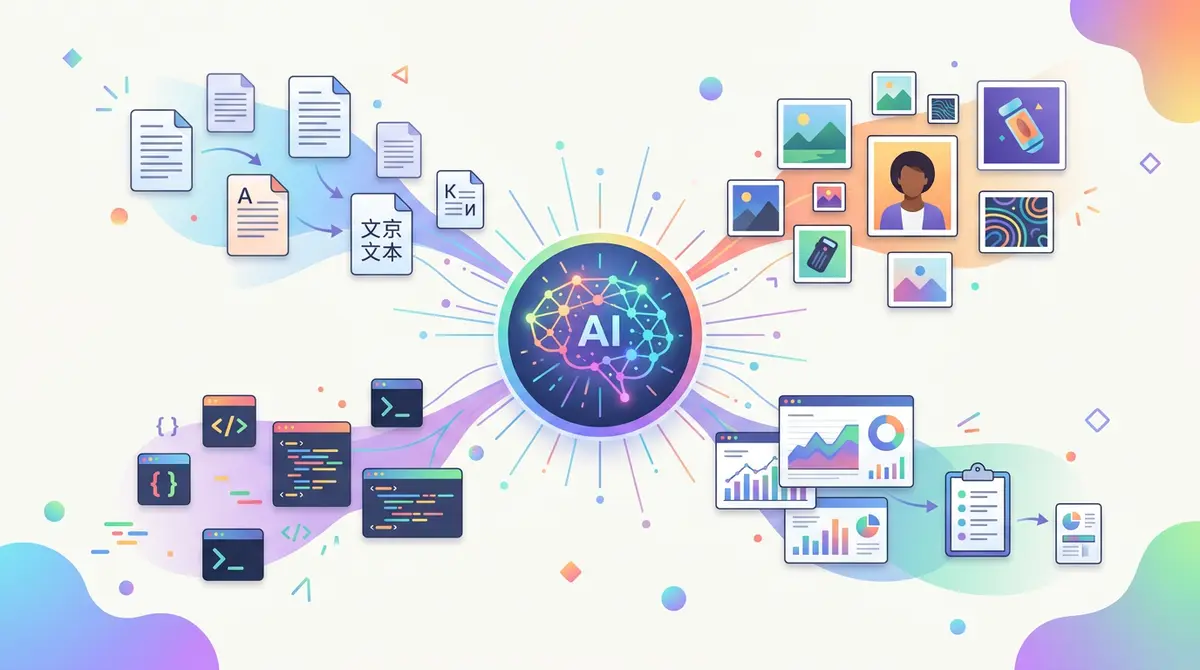
Generative AI produces content: text, draft tables, summaries, code sketches, images. It is trained on large corpora and responds probabilistically to prompts.
Strengths:
- Rapid drafts and variants (email, reports, FAQs)
- Cross-language summarization and translation
- Brainstorming and structuring unstructured information
Limitations:
- No guaranteed correctness without review loops (hallucinations)
- No reliable end-to-end action in enterprise systems without additional architecture
- Dependence on prompt quality and context window
What Is Agentic AI?
Agentic AI pursues goals: it plans steps, calls tools (APIs, databases, ticketing), checks intermediate results, and adapts — like a digital operator with a mandate.
Strengths:
- Automation of multi-step processes with escalation and logging
- Combination of perception (document), decision, and action
- Scaling repetitive work with measurable cycle times
Limitations:
- Higher implementation and governance overhead (roles, policies, monitoring)
- Transparency and explainability must be designed in
- Wrong goals amplify without human-in-the-loop
The Decisive Comparison: 8 Dimensions
Eight practical dimensions make the difference visible:
| Dimension | Generative AI | Agentic AI |
|---|---|---|
| Primary purpose | Produce content | Execute tasks and pursue goals |
| Interaction model | Prompt → answer | Goal → plan → tool steps |
| System coupling | often indirect (copy/paste, connectors) | direct via APIs and orchestration |
| Autonomy | limited to language space | high, with definable guardrails |
| Failure profile | linguistic hallucinations | wrong actions without guardrails |
| Traceability | chat history | audit trail, step logs, policies |
| Time-to-value | very fast for text work | higher setup, stronger ROI on routines |
| Typical role | copilot for knowledge | operator for processes |

Decision Matrix: When Gen-AI, When Agent-AI?
Use this checklist for a first-cut decision:
- Gen-AI fits when the task is wording, summarization, translation, or ideation.
- Agent-AI fits when data must move from system A to B under rules, repeatedly.
- Hybrid when Gen-AI drafts and Agent-AI validates, enriches, and delivers.
- Not agentic yet if governance, data quality, and goals are unclear — clarify first.
- Not Gen-only if operational SLAs, postings, or compliance need tool access.
Why the Future Needs Both
Complementarity matters: Gen-AI provides language and structure; Agent-AI provides enforcement and measurability across the chain.
“Our best outcomes happen when human intuition meets machine speed — not as a substitute, but as an amplifier.” — Hewlett-Packard innovation culture (paraphrase)
Organizations that invest in only one side either sacrifice efficiency or quality at the human–machine interface.
How PaperOffice AI Unites Both Worlds
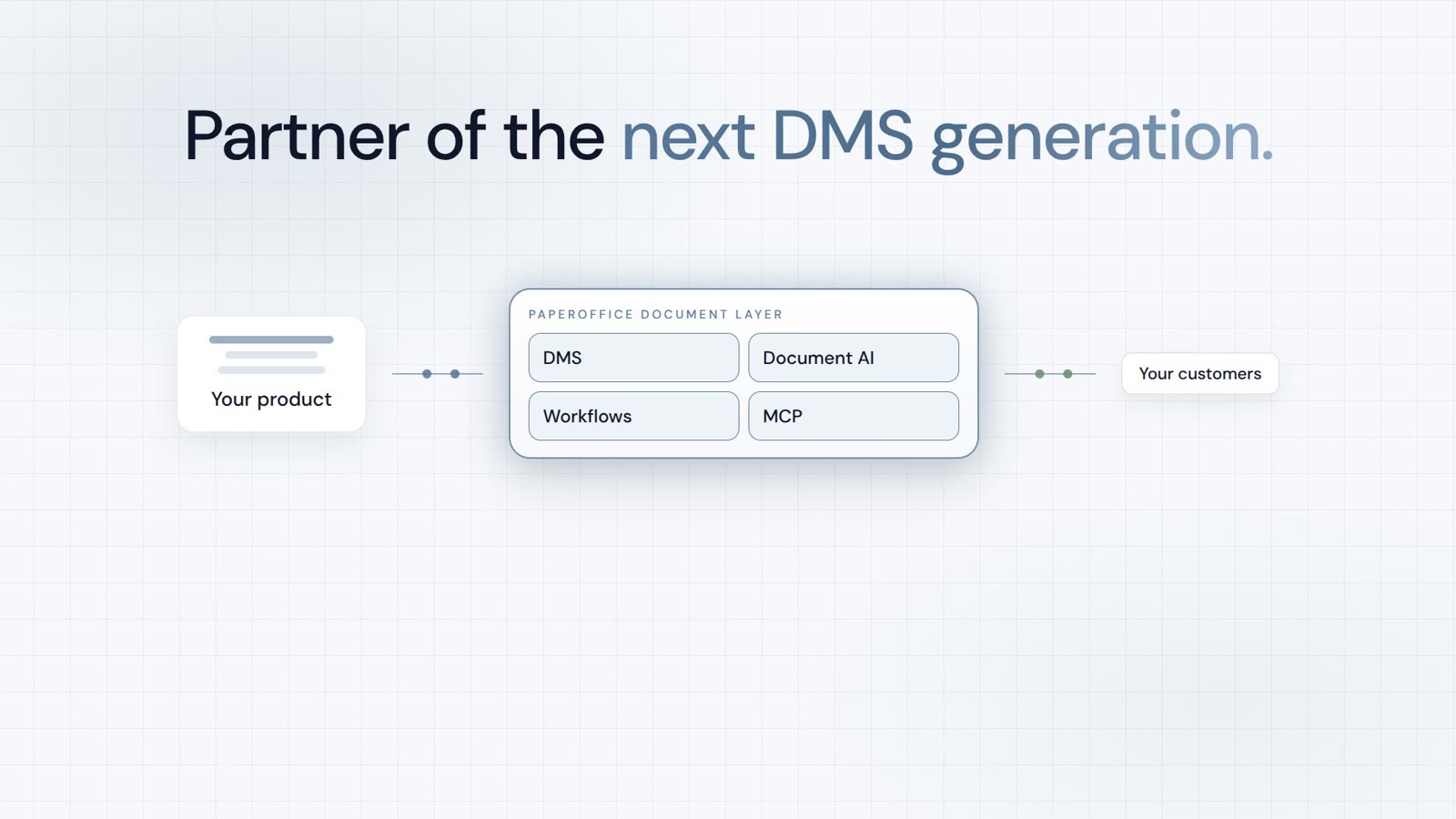
PaperOffice AI combines powerful LLMs (generative) with IDP Agents and atomic API tools (agentic) in one architecture with a knowledge graph and traceability.
| Function | Type | Example |
|---|---|---|
| Understand and summarize free text | Generative AI / LLM | Contract clauses in plain language |
| Extract and validate fields | Hybrid | Invoice data with plausibility checks |
| Trigger tickets, exports, approvals | Agentic AI | Workflow steps via secured tools |
| Knowledge linking across documents | Graph + Gen-AI | Duplicates, relationships, fraud signals |
Conclusion: Not Gen vs. Agent — But Gen + Agent
The question is not which AI is “better,” but which role it plays in your value chain. With clear goals, data quality, and governance, Generative and Agentic AI become joint operational reality — where text work meets process impact.

