













The $285 Billion Question: Why Per-Seat Pricing Is Dying
In February 2026, $285 billion evaporated from SaaS valuations within 48 hours. The iShares Software ETF (IGV) fell 22% year-to-date. Atlassian lost 36% in a single month. The financial press dubbed it the SaaSpocalypse.
The trigger: Anthropic launched Claude Cowork, followed days later by OpenAI’s Frontier. Both demonstrated that AI agents could handle complex knowledge work autonomously. The market understood immediately: if one AI agent does the work of five employees, no one needs five software licenses anymore.
But the SaaSpocalypse was not a crash — it was a correction. The market was not pricing in the end of software. It was pricing in the end of a business model: per-seat pricing.
The Gym Membership Secret: Why Per-Seat Worked for So Long
Fortune put it bluntly: One of the dirty secrets of the SaaS industry is that it’s not that different from running a gym. Gym memberships make money because most members don’t show up regularly. SaaS seat licenses work the same way: enterprises pay for 1,000 Jira seats knowing that 400 of them log in once a month at best.
Per-seat pricing was elegant: it tied vendor revenue to customer team size. More employees meant more seats, more seats meant more revenue. For two decades, this equation worked perfectly.
Then AI agents arrived — and they always show up. They don’t underutilize seats. They don’t need seats at all. An AI agent handling ticket triage, documentation, and project management doesn’t log into Jira as a user. It calls the API directly. Every seat it replaces isn’t one fewer active user — it’s one fewer license sold.

Seat Compression: When One Agent Eliminates Five Licenses
The real-world numbers are unambiguous:
| Company | Before | After | Result |
|---|---|---|---|
| Monday.com | 100 SDRs | AI Agents | Response time: 24h → 3 min, higher conversion |
| SaaStr | 10 Humans | 1.2 Humans + 20 Agents | Same performance |
| Vercel | 10 SDRs | 1 Human + AI Agent | $1,000/year vs. $600,000+ salaries |
But the real impact goes deeper. When Monday.com replaced its 100 SDRs, it wasn’t just 100 seats that disappeared. Each SDR had a CRM license, an email platform, a dialer, a prospecting tool, and an analytics dashboard. A single AI agent doesn’t eliminate one seat — it eliminates five to ten seats across the entire SaaS stack. Analysts call this the Cascading Seat Effect.
The seat compression ratio stands at roughly 1:5 — for every agent deployed, approximately five human seats become redundant. Analysts project that AI agent deployments will eliminate 20 to 35 percent of all enterprise SaaS seats by the end of 2027.
The SaaSpocalypse in Numbers
The market reaction was unprecedented:
| Company | Loss (YTD) | Catalyst |
|---|---|---|
| Atlassian | -36% | First-ever enterprise seat count decline, 1,600 layoffs |
| Salesforce | -26% | Muted guidance despite Agentforce $800M ARR |
| Monday.com | -37% | CEO replaced 100 SDRs, withdrew revenue target |
| Workday | -20% | HR automation concerns, 8.5% workforce reduction |
| HubSpot | -25% | SMB churn to AI-native CRMs |
| Software ETF (IGV) | -22% | Steepest decline since 2008 |
Forrester published a report titled SaaS As We Know It Is Dead. For the first time in the modern era, SaaS traded at a discount to the S&P 500. METR, an AI safety research organization, confirms the trend: the ability of frontier AI agents to solve tasks autonomously has been doubling every seven months — consistently for six years.

The New Pricing Models: Credits, Usage, Outcomes
What replaces per-seat pricing isn’t a single alternative — it’s a spectrum of new models that share one principle: they tie price to work performed, not to the number of users.
Usage-Based and Credit-Based
The most widely adopted new model. Customers buy credits or pay per API call, token, or action:
| Provider | Model | Price |
|---|---|---|
| Salesforce Agentforce | Flex Credits | $0.10 per action (20 credits) |
| OpenAI | Per Token | $2.50 / 1M input tokens (GPT-5.4) |
| Builder.io | Agent Credits | LLM cost + 25% margin |
| Airtable | Token Credits | $6 / 100k tokens |
According to the PricingSaaS 500 Index, 79 companies now use credit-based pricing models — a 126 percent increase year-over-year.
A concrete example: PaperOffice AI has been built on an API-first credit model from day one. Over 300+ API tools — from intelligent document processing and OCR to AI-powered translation — are billed transparently based on actual consumption. No seat lock-in, no unused licenses. Customers pay exactly for what their teams or their AI agents actually use. The result: businesses can start small and scale linearly with their needs, without suddenly hitting a pricing cliff when they grow.
Outcome-Based: Pay Only for Success
The most innovative model — and the fastest growing:
| Provider | Model | Price |
|---|---|---|
| Intercom Fin | Per Resolution | $0.99 per resolved conversation |
| HubSpot Breeze | Per Outcome | $0.50/resolved, $1/qualified lead |
| Zendesk AI | Per Ticket | $1.50 per automated resolution |
Intercom Fin has resolved over 40 million conversations with an average resolution rate of 66 percent. The model proves a simple point: if the AI fails, the customer pays nothing. This builds trust and eliminates risk.
Hybrid: The Current Standard
The majority of companies are converging on a three-layer model: platform fee (base) + usage metering (credits/tokens) + outcome bonus (performance share). According to Bain & Company, 65 percent of SaaS vendors have already layered usage-based components on top of their seat pricing.
MCP and the Agent Economy: Software Buying Software
The Model Context Protocol (MCP) reached 97 million monthly SDK downloads in its first year. It has become the de facto standard for AI agents to communicate with external tools and data sources. And it enables something fundamentally new: software buying software.
An entire ecosystem of MCP marketplaces is emerging where agents use tools via micro-transactions:
| Platform | Model | Example Prices |
|---|---|---|
| ToolOracle | Pay per Outcome | SEO audit: $0.05, lead enrichment: $0.08 |
| Context Protocol | Pay per Response | From $0.01 per response, USDC wallet |
| xpay | Pay per Tool Call | From $0.01, providers keep 95% |
Traditional payment rails like Stripe (minimum $0.30 per transaction) cannot handle micro-transactions of $0.002. These platforms use the x402 protocol with USDC micropayments on the Base blockchain. The agent pays automatically per call — no API key, no subscription.
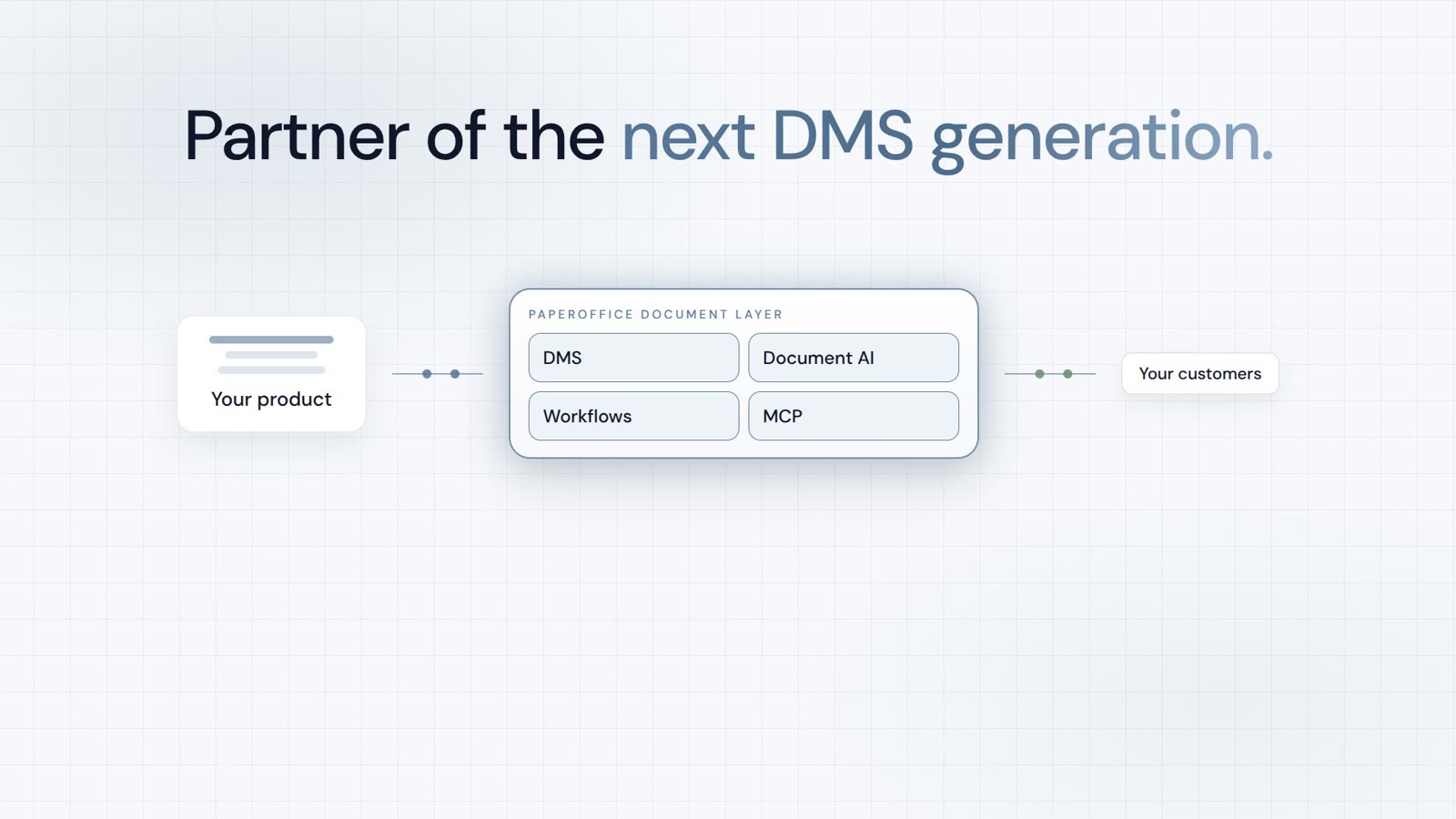
PaperOffice AI is a concrete example of this paradigm shift: the company offers its own MCP server through which AI agents like Claude, ChatGPT, or Cursor can directly access all 300+ document processing tools — from invoice recognition and contract analysis to automated classification. Every tool call is billed per credit. This means an AI agent can autonomously process documents without a human intervening or assigning a license. The exact model that analysts describe as the future is already in production at PaperOffice.
Petr Pátek, one of the most-cited analysts of the SaaSpocalypse, puts it precisely: The market is not pricing in the death of software. It is pricing in the death of software whose value depends on a human sitting in front of it. Value is shifting from the interface (dashboard) to the API.
What This Means for Businesses
For companies buying or building software, the implications are clear:
- Audit SaaS contracts: Identify all per-seat contracts renewing in the next 18 months. Negotiate usage-based or hybrid terms.
- Evaluate API quality: Assess vendors by their API surface, not their dashboard. Structured response schemas, comprehensive endpoint coverage, and MCP compatibility are the new decision criteria.
- Build agent readiness: Gartner projects that 40 percent of enterprise applications will feature AI agents by the end of 2026. Companies that don’t build the infrastructure now will fall behind.
- Read pricing models as strategy signals: Vendors clinging to per-seat are betting that humans remain the primary users. Vendors shifting to usage have understood that agents are taking over.
Companies that treat their API as the product — not as an integration layer — will be the winners of this transition. Headless-first architectures like Stripe and Twilio were barely touched by the SaaSpocalypse.
Outlook: Predictions for 2027 and 2028
Analysts agree on the direction, even as they debate the pace:
| Prediction | Timeline | Source |
|---|---|---|
| 60% of SaaS vendors offer non-seat options | End of 2027 | Industry analysts |
| Per-seat drops from 78% to below 50% of SaaS revenue | End of 2028 | AI Magicx Research |
| Outcome-based at 20%+ of new enterprise contracts | End of 2027 | Market analysis |
| Software spending grows to $1.43 trillion | 2026 | Gartner |
| 35% of point SaaS products replaced by agents | 2030 | Gartner |
The paradox: total software spending is rising even as seats decline. The reason: AI features justify 15 to 25 percent price increases. New categories are emerging — agent orchestration, MCP tooling, inference infrastructure. The pie is getting bigger. Only the slice going to dashboard-first SaaS is getting smaller.
Conclusion: Per-Seat Isn’t Dead — But It’s Dying
Per-seat pricing won’t disappear overnight. For collaboration tools where value scales with team size, it still makes sense. But for any software category where AI agents can perform work autonomously — customer service, data processing, sales development, IT operations, content creation — per-seat pricing is economically indefensible.
The future belongs to models that tie price to work performed: credits, usage, outcomes. Companies that understand this shift — both as buyers and as vendors — are positioning themselves for the next era of enterprise software.
Companies like PaperOffice AI demonstrate that this transformation is not theoretical. With an API-first approach, credit-based pricing, and a dedicated MCP server for the agent economy, they have built the architecture that Bain, Gartner, and a16z identify as viable. The winners won’t be the companies with the prettiest dashboards — they’ll be the ones with the best APIs.
The SaaSpocalypse was not an ending. It was the beginning of a long-overdue correction.


